Some Sunday Stuff: November 9, 2025

Happy Sunday! It’s raining here today, so it started getting dark before 4. I hate it. Not the rain, but the short daylight hours. It’s only been a week, and I’m over it already. Anyway, this year marks 100 years since F. Scott Fitzgerald’s The Great Gatsby was published, so today’s post will be dedicated to the seminal novel.
First up, from The New York Times by William Birdthistle:
President Trump’s Halloween party at Mar-a-Lago, set to the theme of “The Great Gatsby,” re-enacted the decadence of that story’s licentious era: befeathered flappers shimmying in the crowd; gilded and onyx décor; scantily clad women posing in an enormous champagne coupe. The revelatory moment says so much about where we stand today — and what we could be lurching into next.
Published a century ago, F. Scott Fitzgerald’s “The Great Gatsby” captured the culture of an overheated economy on the brink of demise. Just as Jay Gatsby fell from the height of fortune to an ignominious death, the 1920s roared with financial overindulgence until the markets drowned in the Wall Street crash of 1929. The Great Depression followed, and the consequences for the global economy proved calamitous.
Today we find ourselves again dancing toward new highs in the stock market. Speculative money is once more pouring into risky investment schemes, with staggering sums of money being thrown at artificial intelligence and cryptocurrencies. But rather than heed a century of hard-won lessons, the Trump administration’s financial regulators are embracing dissolute policies to keep the punch flowing.
The financial excesses of 100 years ago teach us how high the costs of negligent oversight of our markets can be. When sentinels sleep, fraudsters flourish; their frenzied celebration of unreal profits pumps froth into the market; ultimately, with panic and pain, bubbles will burst. As stages of that cycle are recurring, we must decide whether to intervene now — or to mop up the mess later.
The parallels between the 1920s and the 2020s are numerous — and ominous. The 1920s economy boomed while America recovered from a deadly pandemic, the flu of 1918. Americans used installment plans — the precursor to today’s ubiquitous “buy now, pay later” plans at online checkouts — to spend liberally on consumer products, and they poured money into speculative new investments. Automobile and telephone stocks were the high-flying tech investments of their day; Tesla and Apple are two of ours.
The prevailing interest rate was around 5 percent, as it is today. And as with today, masses of Americans took advantage of easy credit and ubiquitous stock brokerages to speculate in finance. In 1929, a New York Times editor quoted a major newspaper’s financial expert who said that the “huge army that daily gambles in the stock market” had come to include, in the editor’s words, “the woman nonprofessional speculator,” whose share of market trading grew by one estimate from less than 2 percent to 35 percent. That influx of buying from 1919 to 1929 drove the stock market up more than sixfold over the decade — a growth rate our market has actually surpassed over the past three years.
Nick Carraway, the narrator of “The Great Gatsby,” was a bond salesman. Today he might work for a crypto exchange or Robinhood, the popular app that allows neophytes to bet on financial options like a game on their smartphones. Robinhood makes a good deal of money from the interest its users pay to borrow money to buy yet more investments. Investing on margin, as this practice is known, was a major source of the surge that drove markets to perilous heights in the 1920s. And when stocks began to fall, margin calls — the demands for loans to be repaid by selling the stocks, if necessary — were a major accelerant of the crash.
…
Ultimately, the unsustainable cannot be sustained. Between 1929 and 1932, the stock market dropped 77 percent, and the global economy staggered into the Great Depression while unemployment and malnutrition spiked. In 1932, suicide rates soared to their highest in recorded history.
Financial failure on such a massive scale taught America important lessons, including the need for prudent regulation. Franklin D. Roosevelt, who swept into the presidency with 472 of 531 electoral votes and a mandate to launch his New Deal, signed waves of legislation to restore confidence in the American financial system, including the securities laws that created federal rules and an agency — the Securities and Exchange Commission — dedicated to their enforcement.
The chief mandate of those rules was to ensure that anyone soliciting investment from the public told the world about their operations — and was held responsible if they omitted crucial information or materially misstated the facts. Any companies that chose not to release such information would have to limit their pitch to small numbers of investors or to sophisticated investors who could fend for themselves. This policy has worked spectacularly well for decades, pulling America’s capital markets out of the smoldering ruins of devastation to become the largest, deepest and most efficient in the world.
Read the rest here. Sigh.
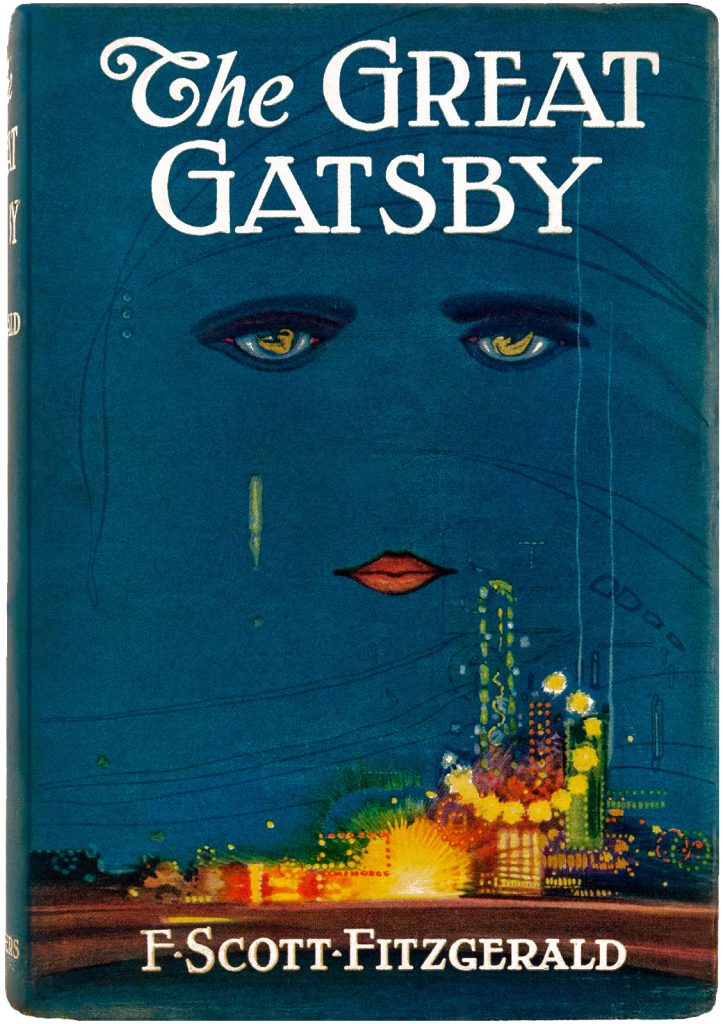
So Gatsby is great now, but it wasn’t such a hit when it first hit the shelves. Hephzibah Anderson writes at the BBC:
Misunderstanding has been a part of The Great Gatsby’s story from the very start. Grumbling to his friend Edmund Wilson shortly after the novel was published in April 1925, Fitzgerald declared that “of all the reviews, even the most enthusiastic, not one had the slightest idea what the book was about”. Fellow writers like Edith Wharton admired it plenty, but as the critic Maureen Corrigan relates in her book So We Read On: How The Great Gatsby Came to Be and Why It Endures, popular reviewers read it as crime fiction, and were decidedly underwhelmed by it at that. Fitzgerald’s Latest A Dud, ran a headline in the New York World. The novel achieved only so-so sales, and by the time of the author’s death in 1940, copies of a very modest second print run had long since been remaindered.
Gatsby’s luck began to change when it was selected as a giveaway by the US military. With World War Two drawing to a close, almost 155,000 copies were distributed in a special Armed Services Edition, creating a new readership overnight. As the 1950s dawned, the flourishing of the American Dream quickened the novel’s topicality, and by the 1960s, it was enshrined as a set text. It’s since become such a potent force in pop culture that even those who’ve never read it feel as if they have, helped along, of course, by Hollywood. It was in 1977, just a few short years after Robert Redford starred in the title role of an adaptation scripted by Francis Ford Coppola, that the word “Gatsbyesque” was first recorded.
…
If this all leaves Fitzgerald purists twiddling their pearls like worry beads, it’s quite possible that while some such projects may further perpetuate the myth that throwing a Gatsby-themed party could be anything other than sublimely clueless, others may yield fresh insights into a text whose very familiarity often leads us to skate over its complexities. Take, for instance, Michael Farris Smith’s new novel, Nick. The title refers, of course, to Nick Carraway, the narrator of Gatsby, who here gets his own fully formed backstory. It’s the tale of a Midwesterner who goes off to Europe to fight in World War One and comes back changed, as much by a whirlwind love affair in Paris as by trench warfare. There’s room for an impulsive sojourn in the New Orleans underworld before he heads off to Long Island’s West Egg.
ike many, Smith first encountered the novel in high school. “I just completely didn’t get it”, he tells the BBC, from his home in Oxford, Mississippi. “They seemed like a lot of people complaining about things they really shouldn’t be complaining about.” It was only when he picked it up again while living abroad in his late 20s that he began to understand the novel’s power. “It was a very surreal reading experience for me. It seemed like something on almost every page was speaking to me in a way I had not expected,” he recalls.
Reaching the scene in which Carraway suddenly remembers it’s his 30th birthday, Smith was filled with questions about what kind of a person Gatsby’s narrator really was. “It seemed to me that there had been some real trauma that had made him so detached, even from his own self. The thought crossed my mind that it would be really interesting if someone were to write Nick’s story,” he says… Smith points to a quote from one of Fitzgerald’s contemporaries as having provided the key to understanding Carraway. “Ernest Hemingway says in [his memoir] A Moveable Feast that we didn’t trust anyone who wasn’t in the war, and to me that felt like a natural beginning for Nick.” Smith imagines Carraway, coping with PTSD and shellshock, returning home to a nation that he no longer recognises. It’s a far cry from the riotous razzmatazz of all that partying, yet Carraway is, Smith suggests, the reason Fitzgerald’s novel remains read. “Maybe it’s not the champagne and the dancing, maybe it is those feelings of wondering where we are, the sense that anything can crumble at any moment, that keep Gatsby meaningful from one generation to the next.”
Read the whole thing here.
Scott has always gotten the glory, but do you know Zelda was a writer, too? Or a dancer?
The Great Gatsby is an American classic, without a doubt. But… is it actually good? To Kathryn Schulz, writing at Vulture, absolutely not:
I know how I’m supposed to feel about Gatsby: In the words of the critic Jonathan Yardley, “that it is the American masterwork.” Malcolm Cowley admired its “moral permanence.” T. S. Eliot called it “the first step that American fiction has taken since Henry James.” Lionel Trilling thought Fitzgerald had achieved in it “the ideal voice of the novelist.” That’s the received Gatsby: a linguistically elegant, intellectually bold, morally acute parable of our nation.
I am in thoroughgoing disagreement with all of this. I find Gatsby aesthetically overrated, psychologically vacant, and morally complacent; I think we kid ourselves about the lessons it contains. None of this would matter much to me if Gatsby were not also sacrosanct. Books being borderline irrelevant in America, one is generally free to dislike them—but not this book…
I will grant Fitzgerald this much: Somehow, in the five years between his literary debut and The Great Gatsby, he taught himself to write. This Side of Paradise is intermittently brilliant but terrifically uncontrolled. Gatsby, by contrast, is focused and deliberate: a single crystal, scrupulously polished.
It is an impressive accomplishment. And yet, apart from the restrained, intelligent, beautifully constructed opening pages and a few stray passages thereafter—a melancholy twilight walk in Manhattan; some billowing curtains settling into place at the closing of a drawing-room door—Gatsby as a literary creation leaves me cold. Like one of those manicured European parks patrolled on all sides by officious gendarmes, it is pleasant to look at, but you will not find any people inside.
Indeed, The Great Gatsby is less involved with human emotion than any book of comparable fame I can think of. None of its characters are likable. None of them are even dislikable, though nearly all of them are despicable. They function here only as types, walking through the pages of the book like kids in a school play who wear sashes telling the audience what they represent: OLD MONEY, THE AMERICAN DREAM, ORGANIZED CRIME. It is possible, of course, to deny your readers access to the inner lives of your characters and still write a psychologically potent book: I give you Blood Meridian. But to do that, you yourself must understand your characters and conceive of them as human.
Fitzgerald fails at that, most egregiously where it most matters: in the relationship between Daisy and Gatsby. This he constructs out of one part nostalgia, four parts narrative expedience, and zero parts anything else—love, sex, desire, any kind of palpable connection. Fitzgerald himself (who otherwise expressed, to anyone who would listen, a dazzled reverence for his own novel) acknowledged this flaw. Of the great, redemptive romance on which the entire story is supposed to turn, he admitted, “I gave no account (and had no feeling about or knowledge of) the emotional relations between Gatsby and Daisy.”
I want to know, Dear Reader: do you like Gatsby? I do, but I’d love to hear your thoughts. Read Schulz’s piece here. Have you seen the films? Either of them? Which do you prefer? Here’s a cool comparison:
And finally, this 1925 hit, “Alone At Last” by Carl Fenton. Have a great week!